Mid Life Health Focus: Physical Health
Physical health in your 40s 50s and 60s starts to take on a new rhythm
Gone are the days when we can build muscle easily. We may also notice we’re more prone to soreness or joint pains after workouts and we don’t recover as quickly from injuries. Just as our mental and emotional health evolve with time, our physical care needs to mature too. Our 40s, 50s and 60s are about protection for our bodies as we transition into the later seasons of our life.
Below we will share strategies you can use for your physical health in your 40s and then over 50 to set you up for a lifetime of strength. Don’t miss the message from Barb Jones through the lens of acupuncture and Traditional Chinese Medicine.
40’s – Prevention
Bone density peaks in your 30’s and becomes fairly stable in your 40’s. However, as women enter perimenopause and estrogen starts to decline, early osteopenia can emerge. At the same time, muscle mass and strength start to decrease in both men and women, beginning as early as age 35 and at a rate of about 1-2% per year (Harvard Health, 2023.) Strong muscle help support strong bones, making early prevention essential.
The World Health Organization recommends 150-300 hours of moderate to vigorous-intensity aerobic physical activity per week, or roughly 20–40 minutes per day. Some recent evidence suggests that sitting for long periods after exercise can reduce some of that benefit. To maximize bone and muscle health, stay active throughout the day – move while doing chores, work while standing or walking, where possible. Take opportunities for any moments of activity.
Strategies for Prevention
Build muscle strength with resistance and weight bearing activities. Jump training, when performed safely, has also been shown to offer bone health benefits.
All exercise should be discussed with your doctor and it’s best to work with skilled trainers to ensure safety.
Make sure you eat adequate protein – aim for .7-1g of protein per kg of body weight. (Roughly 70g for 150 lb person.)
Eat foods rich in Calcium, Magnesium and Omega 3, such as salmon, nuts and seeds, dairy (if tolerated), leafy greens, legumes and whole grains. (More on Magnesium)
Get your Vitamin D checked annually.
50’s & 60s Protection
By midlife the stakes increase. According to the Clinicians Guide to Prevention and Treatment of Osteoporosis (2022), the annual number of new osteoporotic fracture now exceeds the combined annual number of new cases of heart attack, breast cancer, and prostate cancer. Women face a 2–4 times higher risk for an osteoporotic fracture than men, largely due to declining estrogen levels.
The habits you built in your 40s — staying active, building strength, and eating well — now serve as your foundation. As levels of testosterone and IGF-1 decline with age in both men and women, the body’s ability to repair tissue and rebuild muscle after exercise slows. This contributes to gradual losses in muscle strength, balance, and coordination, all of which increase the risk of falls. Because strong muscles stabilize joints and support posture, maintaining muscle health is essential to protecting bones, ligaments, and overall function.
Strategies for Ongoing Protection
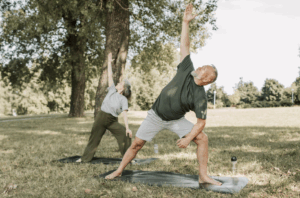
Focus on functional training and balance techniques, such as dance, Pilates, yoga or Tai Chi. Small challenges, such as tying your shoes without sitting can help maintain coordination.
Get your bones checked with a DXA scan (dual-energy X-ray absorptiometry).
Continue to get sufficient protein. Good sources are eggs, fish, lean meats and bone broth.
Maintain your Vitamin D status and continue to enjoy calcium-, magnesium-, and Omega-3 rich foods as before.
Acupuncture for Pain
With Barb Jones
If pain is limiting your ability to participate in your favorite physical activities, acupuncture may be a valuable tool for you.
By stimulating specific points on the body, acupuncture promotes the release of endorphins, reduces inflammation, improves blood circulation and flushes toxins. These all help alleviate acute or chronic pain and enhance mobility, making it easier for you to get back to your sports activities and exercise routines that make strong muscles and bones.
Whether you’re recovering from a recent injury or managing a chronic condition, acupuncture can be an effective way to support pain relief, improve movement, and return to the activities you love with greater comfort and ease.